How to Find the Best Magnet Fishing Spots Near You
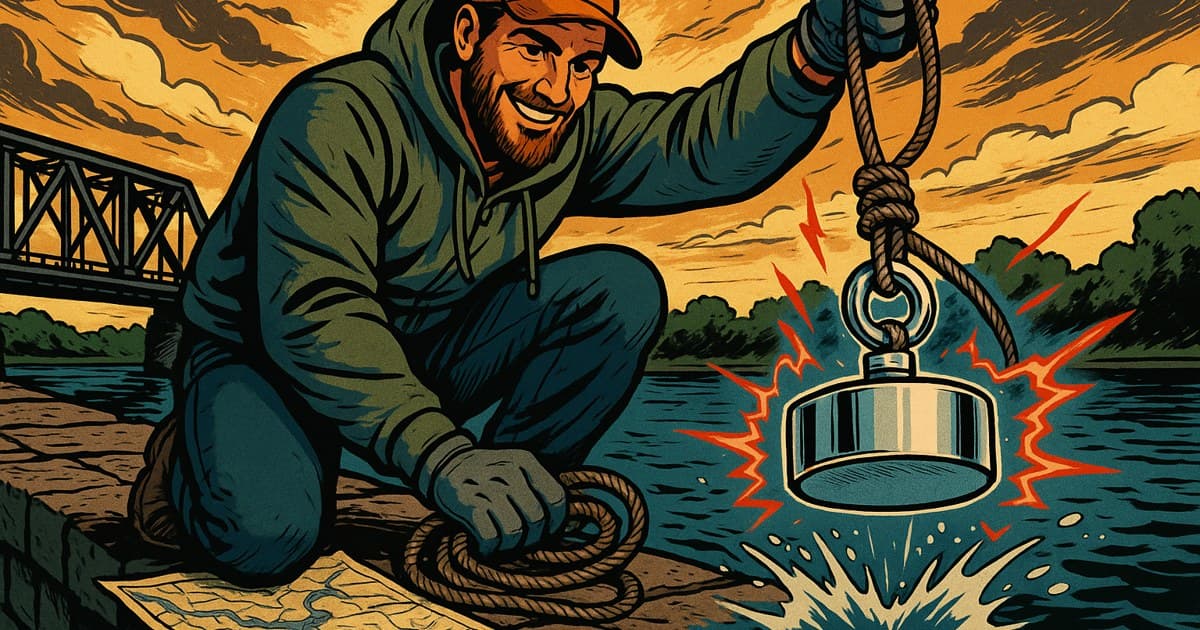
The Water Doesn't Give Up Its Secrets Easily
Most people drive past a hundred perfect magnet fishing spots every single week without knowing it. That canal behind the shopping center, the old iron bridge on the county road, the pond in the park where kids have been throwing bikes for decades, they're all out there, loaded with history and metal, just waiting for someone with a magnet and a little curiosity.
Finding great magnet fishing spots near you isn't really about luck. It's about knowing what to look for, where to look for it, and doing a small amount of homework before you ever leave the house. Once you understand the logic of where metal collects underwater, you'll start seeing promising water everywhere. (If you haven't made your first throw yet, read how to go magnet fishing first — this post assumes you've got your gear sorted.)
One pattern from my own trips is worth stating up front: the sides of docks where boats moor have never left me empty-handed. Fire extinguishers, a boat ladder, boat railings — people drop things where boats tie up. If your area has a public dock with slips, start there.
This guide walks you through that whole process: where to look, how to research a spot from your couch, how to confirm access is legal, and what to bring on a scouting trip. If you're still putting together your kit, the gear guides at /magnet-fishing-gear are a great place to start before you head out.
Where Treasure Actually Collects: Bridges, Docks, and Old Crossings
Metal doesn't end up underwater randomly. It ends up where people have been spending time near water for a long time. The single best predictor of a productive spot is human activity, especially old human activity. The older the better.
Bridges are the classic starting point for good reason. People have been dropping, throwing, and losing things from bridges for as long as bridges have existed. Old stone or iron bridges on routes that were once busy trade roads are especially promising. Even modern concrete bridges over slow rivers can hold decades of accumulated metal underneath them.
Docks and boat ramps are nearly as reliable. Boat hardware, anchors, tools, and fishing gear all end up in the water at launch sites. Public boat ramps that have been in use for 30 or 40 years can be surprisingly productive. Private docks on lakes are off-limits without permission, but public marina areas are worth checking.
Old river crossings and fords are a more advanced find, but they're often the most rewarding. Before bridges were common, wagons and horses crossed rivers at shallow, rocky fords. Those crossings were used for generations, and plenty of metal went into the water there. Old maps (more on those in a moment) can point you right to them.
More Spots Worth Adding to Your List
Beyond bridges and docks, there's a whole category of spots that newer magnet fishers often overlook. Canals are a big one. Industrial canals built in the 1800s and early 1900s were working waterways, and working waterways collect an enormous amount of metal over time. If your area has any canal history, it's worth exploring.
Urban waterways deserve special attention. City rivers and streams have had metal thrown, dropped, and washed into them from every direction for over a century. Storm drains, old factory sites along the banks, and city park ponds are all worth scouting. The article on urban magnet fishing goes deep on this if you want a full breakdown.
Parks with ponds or lakes are often overlooked because they seem too obvious. But a park pond that's been there since the 1950s has had generations of kids throwing things into it. Coins, bikes, toy cars, the occasional shopping cart, it adds up. Check whether the park is managed by a city, county, or state agency, because that affects the rules.
Swimming holes, old mill sites, and spots near demolished waterfront buildings are also worth a look. Anywhere that people gathered near water for work or recreation is a candidate. The history of magnet fishing gives some good context for why certain types of sites tend to produce more finds than others.
Using Maps and Local History to Scout From Home
The best scouting happens before you ever leave the house. A few free tools can tell you more about a stretch of water than an afternoon of walking the bank.
Google Maps and satellite view are your first stop. Switch to satellite mode and trace the waterways near you. Look for bridge shadows, dock structures, boat ramps, and any signs of past industrial use along the banks. The historical imagery feature (the clock icon in Google Maps) lets you flip back through years of satellite photos, which can reveal old structures that have since been demolished.
Historical maps are where things get really interesting. The USGS Historical Topographic Map Explorer (topoView) is a free tool that lets you pull up USGS topo maps going back to the late 1800s. Old topo maps show ford crossings, ferry landings, mills, and bridges that no longer exist. If an 1890 map shows a river crossing that's now just a quiet stretch of water, that's a spot worth investigating.
Local history resources are underrated. County historical societies, local libraries, and even old newspaper archives (many are digitized now) can tell you where the old industrial sites were, where bridges washed out, and where communities used to gather near water. A quick search for your county's name plus 'historical map' or 'river history' can turn up a surprising amount of useful detail. The magnet fishing forums and communities are also a great place to ask locals what's been productive in your region.
Checking Access and Local Rules Before You Go
Finding a great spot on a map is only half the job. The other half is making sure you're actually allowed to be there and fish there. This step is non-negotiable, and skipping it is how people end up with fines or get the hobby restricted in their area.
Public vs. private land is the first question. Just because a body of water is public doesn't mean the bank access is. In many states, the water itself may be public but the land on either side is privately owned. Always confirm you have legal access to the bank or structure you're fishing from. When in doubt, ask. A quick call to a property owner or a local parks department takes five minutes and keeps everything above board.
Permits and local regulations vary a lot by location. Some parks require a permit for magnet fishing. Some waterways are off-limits for environmental or historical preservation reasons. A few U.S. states have specific rules about magnet fishing, and laws differ significantly outside the U.S. The state-by-state guide to magnet fishing laws is a solid starting point for U.S. readers, and the international laws overview covers other countries. Always check local rules directly with the managing agency, because regulations change.
What to do with your finds is also part of the legal picture. Some jurisdictions require you to report certain finds, especially anything that looks like a weapon or historical artifact. If you pull up a firearm, don't handle it beyond getting it out of the water, and follow the guidance in what to do if you find a gun while magnet fishing. For general disposal of rusty junk, the guide on disposing of magnet fishing finds has practical options.
Your Pre-Trip Scouting Checklist
Before you head out to a new spot, run through this quick checklist. It takes about 15 minutes and saves a lot of frustration.
Research the spot:
On the day:
- Pull up the location in satellite view and look for structures, dock shadows, and bank access points
- Check a historical topo map for old crossings, mills, or bridges at or near the site
- Confirm who manages the land (city park, county, state agency, private)
- Look up any permit requirements or local restrictions
- Check your state's magnet fishing laws if you haven't recently
- Note the water depth and current from any available info (local fishing forums are good for this)
- Arrive and walk the bank before you cast, looking for snag hazards and confirming access signs
- Tell someone where you're going and when you expect to be back
- Bring gloves, a bucket for finds, and a grappling hook for snags
- Pack out everything you pull up, even the stuff you didn't put there
Gear Up Before Your First Scouting Trip
A productive spot with weak gear is a frustrating experience. If your magnet isn't strong enough to hold what it touches, or your rope isn't long enough to reach the bottom, you'll come home empty-handed from even the best location. Getting your setup right before you scout a new spot makes a real difference.
The magnet fishing gear guides cover everything from choosing the right magnet strength for your style of fishing to picking a rope that won't let you down. The comprehensive magnet guide is a great read if you're not sure what pulling force you actually need, and the knots guide will make sure your magnet stays attached to your rope no matter what it grabs.
If you're new to the hobby and want a broader orientation before your first trip, 10 things I wish I knew when I started magnet fishing covers a lot of the early mistakes worth avoiding. The spots are out there. A little preparation means you'll actually make the most of them when you find them.
Frequently asked
Can I magnet fish anywhere there's public water?+
Not automatically. Public water doesn't always mean public bank access, and some parks or waterways require permits or prohibit magnet fishing entirely. Always check with the managing agency before you go, and review your state or local regulations.
What type of spot is most productive for beginners?+
Old bridges over slow-moving rivers or canals are the most consistently productive spots for beginners because they concentrate years of dropped and thrown metal in one place. Public boat ramps are a close second and are usually easy to access legally.
Do I need special equipment to scout magnet fishing spots?+
No special equipment is needed for scouting. A phone or computer with Google Maps satellite view and access to the free USGS topoView tool is enough to identify most promising locations before you visit in person.