
Best Magnet Fishing Kits
If you've been trying to figure out which magnet fishing kit to actually buy — not just which one has the flashiest Amazon listing — you're in the right place. I've spent a lot of time on riverbanks, canals, and bridges pulling stuff up from the bottom, and I've seen firsthand how much the kit you start with matters. A bad rope or an underpowered magnet doesn't just slow you down. It genuinely kills the fun.
This guide breaks things down by skill level — beginner, intermediate, and experienced — because that's honestly the most useful way to think about it. A 3,100lb pull magnet is overkill if you're just starting out, and a cheap 200lb single-sided is going to leave you frustrated if you've been doing this for a year. I'll tell you what's in each kit, what the pull force actually means in real life, and which ones I'd actually hand to a friend. If you're brand new to all of this, you might also want to check out my guide to magnet fishing for beginners before you buy anything.
One more thing: I haven't tried every kit on Amazon — nobody has — but the picks below are based on specs I trust, brands I know, and practical experience with what holds up in the field. Every kit I'm recommending includes at minimum a magnet, rope, and gloves. I'll call out what else is in the box where I know it.
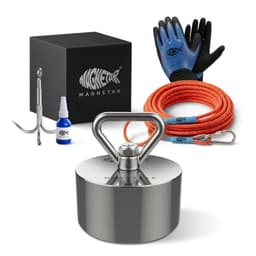
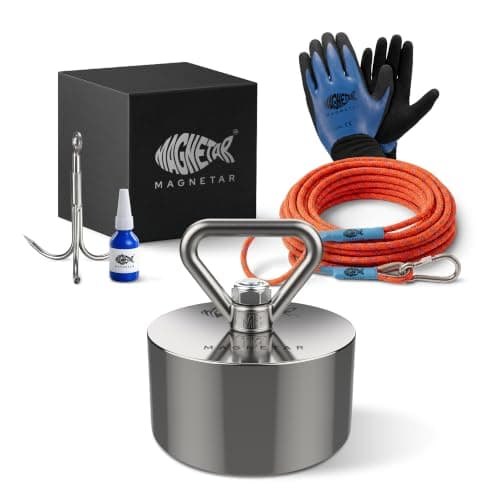
Magnetar Beast 3100LB 360 Degree Kit — $319.99
Experienced magnet fishers who want maximum pull force
Why Your Kit Actually Matters
I remember the first kit I bought. It was some no-name thing I grabbed because it was cheap and had a big pull force number on the listing. The rope frayed after three sessions. The eyebolt started to loosen up after about a week. And the magnet itself was fine, but "fine" isn't really what you want when you're trying to figure out if this hobby is for you. A bad first kit can make magnet fishing feel harder and less rewarding than it actually is.
Here's the thing — a kit isn't just a magnet. The rope takes a beating every single time you throw. It drags across concrete edges, gets yanked over bridge railings, and hauls up rusty hunks of metal that weigh more than you'd expect. Cheap ropes break at the worst moments, usually when something heavy is actually attached. I've seen guys lose finds — and magnets — to a snapped rope that looked fine until it wasn't. Good gloves matter too. You're handling wet, rusty, occasionally sharp stuff. Bare hands are a bad idea.
The right kit doesn't need to be expensive. It just needs to match what you're actually doing. Going out to a shallow canal for the first time is a different situation than hitting a deep river where you're throwing 65 feet of rope and pulling up bike frames. The best places to magnet fish also factor into what gear you need — more on that in the individual picks below.
What to Look For in a Magnet Fishing Kit
Before you start comparing prices, here are the specs and features that actually matter when you're picking a kit. I'll keep it practical.
Pull Force (lbs)
This is the big number you see on every listing — 600lb, 1300lb, 3100lb — and it's the most misunderstood spec in the hobby. Pull force is the maximum theoretical force the magnet can exert on a flat steel surface under ideal lab conditions. In real water, with rust, silt, mud, and awkward angles, you're getting a fraction of that. A 600lb rated magnet might realistically grip 150–200lbs in the field. That's still plenty for coins, tools, and small metal objects. For bigger finds like safes or anchors, you want to be in the 1,000lb+ range. For beginners, anything in the 500–800lb range is a solid starting point.
Single-Sided vs. Double-Sided vs. 360-Degree
Single-sided magnets have one active face and are the most straightforward to use — great for dragging along the bottom. Double-sided magnets attract from both the top and bottom face, which sounds great but can make them harder to control and harder to detach from metal surfaces (I think double-sided magnets are honestly a bit overrated for beginners). 360-degree magnets attract from all sides, making them excellent for dragging along vertical surfaces like bridge supports. Most experienced folks have at least two different configurations.
Rope Quality and Length
This is where cheap kits fall apart — literally. You want braided nylon or paracord-style rope with a good tensile strength rating. The length matters too. For bridges and piers, you might need 50–65 feet. For shallow spots you can walk along, shorter is fine. Look for rope that's rated higher than the magnet's pull force. If your magnet is 1,000lbs and your rope breaks at 800lbs, that's a problem you'll discover at the worst possible moment.
What's Included
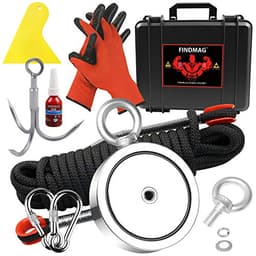
A complete kit should have at minimum: the magnet, a rope (pre-attached or with hardware), and gloves. Better kits add a carrying case, a grappling hook for non-magnetic finds, and thread-locking fluid for the eyebolt. If a kit is missing gloves, factor in the cost of buying them separately — you can find more on the accessories side at magnet fishing accessories.
Eyebolt and Thread Security
The eyebolt is the connection point between rope and magnet. If it strips or loosens, you lose everything. Quality kits use stainless steel eyebolts and include thread-locking compound. It's a small thing that separates a kit that lasts from one that fails you mid-session.
Our Top Picks at a Glance
| Image | Rank | Product | Price | Best For | Shop |
|---|---|---|---|---|---|
 | 1 | Magnetar Allround 1300LB Kit | $179.99 | Intermediate magnet fishers ready to step up from budget gear | Get the Magnetar All Around → |
 | 2 | Magnetar Beast 3100LB 360 Degree Kit | $319.99 | Experienced magnet fishers who want maximum pull force | Get the Magnetar Beast → |
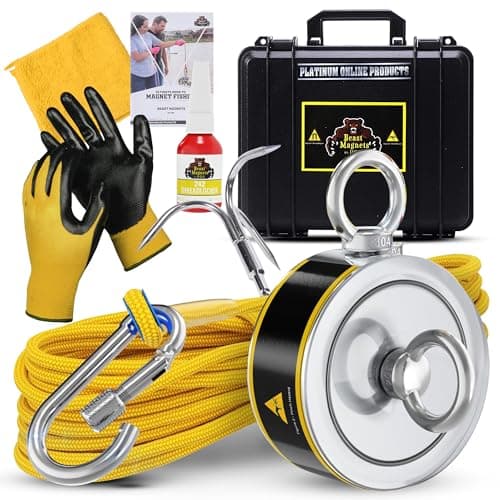
 | 3 | Platinum Online Products 1320LB Double Sided Complete Kit | $54.99 | Beginners who want more than a bare-bones starter kit | Get the Platinum 1320LB Kit → |
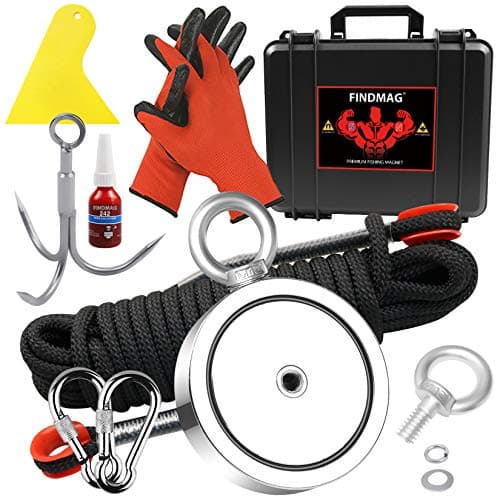
 | 4 | FINDMAG Double Sided 2625LB Kit | $51.99 | Budget-conscious beginners who want maximum pull force per dollar | Get the FINDMAG 2625LB Kit → |
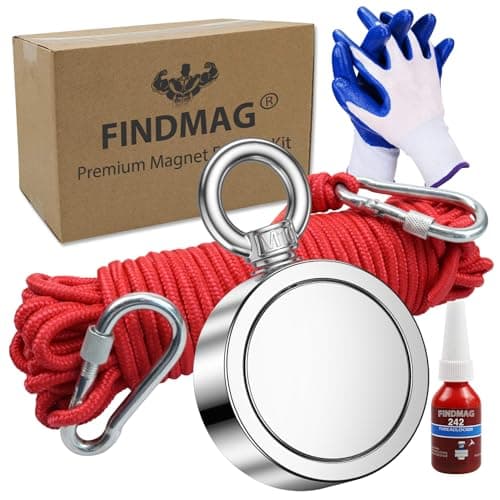
 | 5 | FINDMAG Double Sided 1000LB Kit | $27.99 | Best budget magnet fishing kit for beginners | Get the FINDMAG 1000LB Kit → |
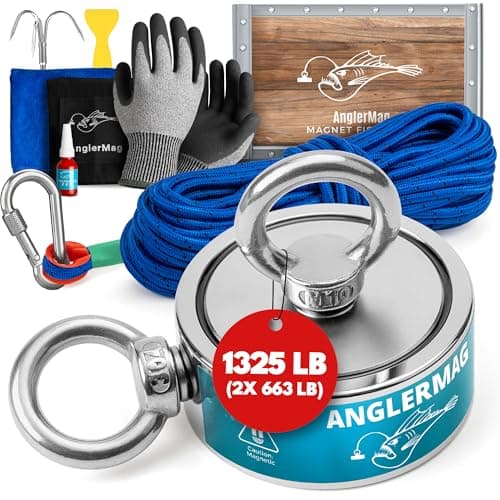
 | 6 | AnglerMag 1325LB Double Sided Kit | $44.99 | Best alternative beginner double-sided kit | Get the AnglerMag 1325LB Kit → |
Which Kit Should You Actually Get?
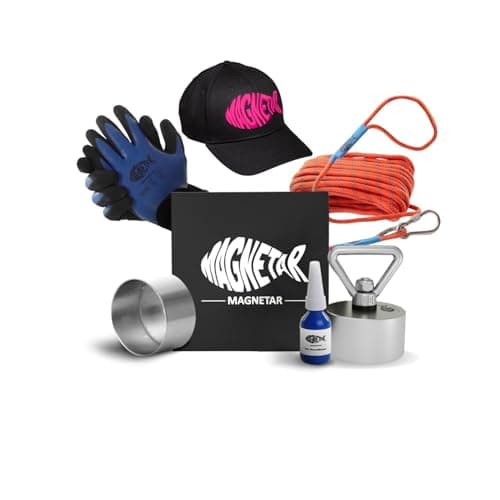
If you're a beginner or buying a kit for a kid, the FINDMAG 2625LB or the Platinum 1320LB are the practical starting points — both are under $55 and give you enough magnet to actually find things. If you've been doing this a while and want to stop fiddling with gear that's holding you back, the Magnetar Allround 1300LB is where I'd point you. It's real money but it's also a real kit. And if you're experienced, fishing tough spots, and want the best all-around setup on this list — the Magnetar Beast 3100LB doesn't leave much on the table.
Frequently Asked Questions
What pull force do I need in a magnet fishing kit as a beginner?+
For most beginners, a magnet rated between 500lb and 800lb pull force is plenty. Real-world pull is always less than the lab rating — mud, rust, and awkward angles cut into that number fast. You'll find coins, tools, bolts, and most common metal finds without needing 2,000+ lbs. Save the heavy-duty stuff for when you know what spots you're fishing and what you're after.
What should be included in a magnet fishing kit?+
At minimum: the magnet, a rope, and gloves. A complete kit worth buying also includes thread-locking compound for the eyebolt, and ideally a carry case and grappling hook for non-magnetic finds. If the kit you're looking at is missing gloves, factor in the cost of buying them separately before you decide it's a deal.
Are magnet fishing kits on Amazon any good?+
Some are, some aren't. The brand and the Amazon sales rank tell you a lot — a kit with a high BSR (low number) is moving units, which usually means people aren't returning it in droves. Magnetar is a legitimate brand with a real following. FINDMAG and Platinum also show up well in rankings. I'd stay away from completely unrecognizable brands with no track record, especially on the rope and hardware side.