
Best Magnet Fishing Magnets
If you've ever stood on a bridge and wondered what's sitting on the bottom of that river, you already understand magnet fishing. The magnet is the whole thing — it's what determines whether you're pulling up a rusted bolt or a Civil War-era cannonball. I've been through more magnets than I'd like to admit, and I've learned that picking the wrong one doesn't just limit your finds, it actively makes the hobby more frustrating. So this guide is my attempt to cut through the noise.
What you'll find here are my actual picks across different pull force ranges — under 500 lbs for people just getting started, 500–1000 lbs for folks who are hooked and want more, and 1000+ lbs for the obsessed. I'll also get into neodymium grades, coatings, and whether a double-sided magnet is actually worth it (short answer: depends). If you're brand new to this whole thing, you might want to start with my magnet fishing for beginners page first. Otherwise, let's get into it.
One thing I want to be upfront about: I haven't tried every magnet on Amazon. Nobody has. What I have done is spend a lot of time on the water, break some gear, lose some gear to the bottom of a canal, and figure out what actually matters when you're lowering a magnet off a bridge at 6am hoping nobody thinks you're suspicious.
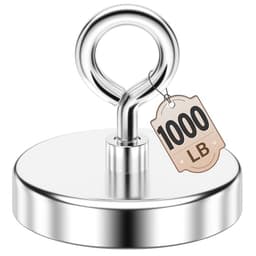
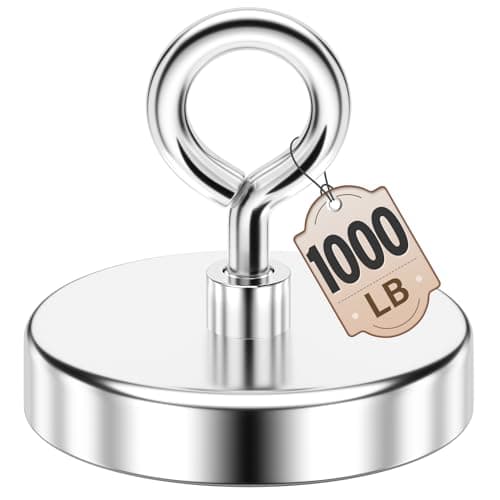
FINDMAG 1000 LBS Fishing Magnet — $33.99
Best overall magnet for serious use
Why the Right Magnet Actually Matters
I remember the first time I used a 1000 lb pull magnet — nearly dislocated my shoulder on a manhole cover that had been sitting on the bottom of a drainage canal for who knows how long. That magnet latched on and did not want to let go. I was using a cheap 200 lb magnet before that, and it would just skid right over anything heavy. You'd feel it bump something and then... nothing. Frustrating doesn't cover it.
The pull force rating on a magnet isn't just a marketing number. It's the difference between actually lifting something off the bottom and dragging it a few inches before losing it. Heavier ferrous objects — thick steel plates, old tools, bike frames — need real holding power to break the suction of the sediment they've settled into. A weak magnet on a good target is like a handshake with a wet noodle. You make contact, you feel something, and then it's gone.
Coating matters too, and this is something most people skip over. A nickel-coated magnet looks shiny and great right up until it hits a rocky riverbed a few dozen times. Epoxy-coated magnets take the abuse better. They're not pretty but they last. I've got a nickel-coated magnet sitting in my garage right now with chips around the edges from one bad day on a rocky creek, and I won't use it anymore because exposed neodymium corrodes fast in water. That's a dead magnet waiting to happen.
What to Actually Look for in a Magnet Fishing Magnet
Pull Force Range
Pull force is rated in pounds and tells you the maximum holding force against a flat steel surface under ideal conditions. Real-world performance is usually lower — maybe 60–70% of the rated number in the water. For beginners, 300–500 lbs is plenty to get started and learn how to handle a magnet safely. Intermediate folks who've been at it a while will want 500–1000 lbs. And if you're fishing seriously, near old bridges or industrial sites where heavy steel is likely, you want 1000 lbs and up. Check out best places to magnet fish if you're not sure where to take your setup.
Neodymium Grade: N42 vs N52
Neodymium magnets are graded on a scale — N35 on the low end up to N52 at the top. The number tells you the magnetic strength of the material itself. N42 is solid and what you'll find in most mid-range fishing magnets. N52 is the strongest grade commercially available and will give you more pull force at the same physical size. The catch with N52 is that it's more brittle — it can chip or crack if it slams into something hard, which happens a lot when you're dragging it along a concrete riverbed. N42 is honestly a good balance for most people.
Single-Sided vs Double-Sided vs 360-Degree
A single-sided magnet has one flat magnetic face, usually on the bottom. Simple. Most people start here and it works great for dragging along the bottom. A double-sided magnet has two active faces — top and bottom — which sounds great until you realize it also doubles the chance of it latching onto your boat, dock, or every piece of rebar in the bridge you're fishing under. I think double-sided magnets are overrated for beginners, honestly. The 360-degree magnet is a different design — it's cylindrical and grabs from all sides, which makes it useful for vertical drops into deep water where you're fishing straight down. Good for wells or narrow spots. Different tool, different situation.
Coating Type
Nickel coating is common and gives that polished look, but it chips. Once the coating is damaged, the neodymium underneath is exposed to water and it starts to corrode and lose strength fast. Epoxy coating is tougher, handles impacts better, and holds up to repeated dunks in muddy, gritty water. It's not as pretty. I don't care. My magnets take a beating and I need them to last.
Eye Bolt and Thread Quality
This is the one people always forget about until it fails. The eye bolt is how your rope connects to your magnet. If the threading is weak or the bolt pulls out under load, you lose your magnet. Full stop. Look for a countersunk bolt or a bolt that's glued in with thread-lock. Some cheaper magnets have eye bolts that back out after a few uses. Always thread-lock your eye bolt before you fish, regardless of brand.
Our Top Picks at a Glance
| Image | Rank | Product | Price | Best For | Shop |
|---|---|---|---|---|---|
 | 1 | FINDMAG 1000 LBS Fishing Magnet | $33.99 | Best overall magnet for serious use | Get the FindMag 1000LB → |
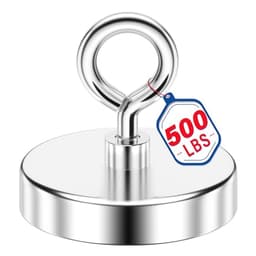
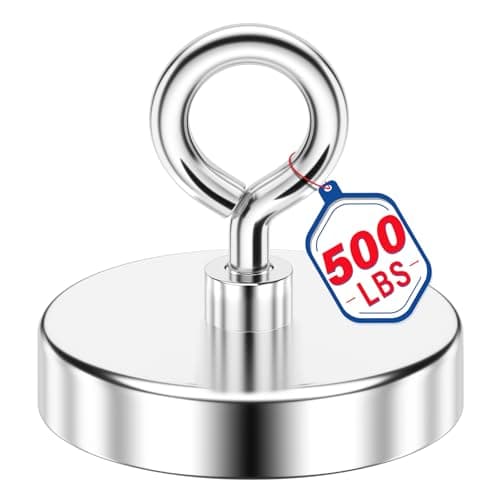
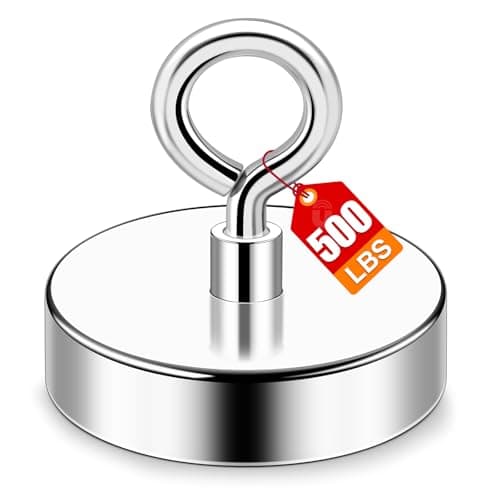
 | 2 | Niuknow 500 lbs Fishing Magnets | $14.99 | Best for intermediate magnet fishers | Get the Niuknow 500LB → |
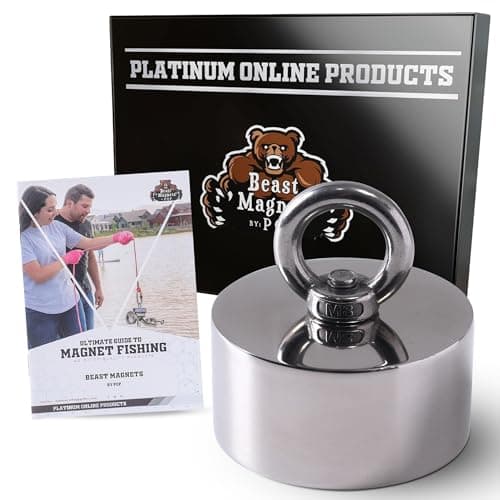
 | 3 | Platinum Online Products 2000LB Double-Sided Fishing Magnet | Best for experienced fishers wanting max pull force | Get the 2000LB Double Sided → | |
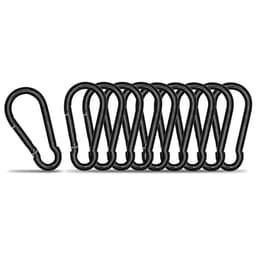
 | 4 | KINLINK Small Carabiner Clip Hook | $6.69 | Best budget accessory for magnet connection | Get the KINLINK Carabiner → |
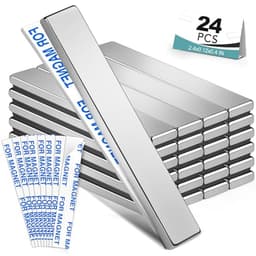
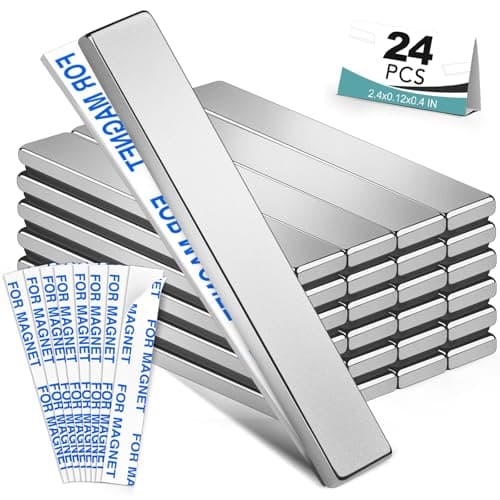
 | 5 | BEST CHOICE MAGNETS 24 Pack Neodymium Bar Magnets | $24.99 | Best for DIY rigs and magnet experimentation | Check price on Amazon → |
 | 6 | Platinum Online Products 2000lb 360 Degree N52 Fishing Magnet | $74.99 | Best for experienced magnet fishers who want maximum performance | Get the Platinum 2000LB → |
 | 7 | BEST CHOICE MAGNETS 500 lbs Fishing Magnet | $13.99 | Alternative to the Niuknow 500LB | Get the BEST CHOICE MAGNETS 500LB Magnet → |

So What Should You Actually Get?
If you're just starting out, go with a 500 lb magnet — the Niuknow is cheap enough that you won't feel bad if you drop it in a river. If you've been at this for a while and want to actually commit to a real setup, the FINDMAG 1000LB at $33.99 is where I'd put my money. It's got the pull force to actually move things off the bottom, it's selling consistently on Amazon, and the price doesn't make you wince. Don't forget a decent carabiner clip and check out the full magnet fishing accessories page if you want to build out the rest of your rig properly.
Frequently Asked Questions
What does the pull force number actually mean on a magnet fishing magnet?+
Pull force is the maximum holding strength of the magnet against a flat steel surface under perfect conditions — think clean, dry, flush contact. In the water, with mud, sediment, and angled contact, your real-world pull is typically 60-70% of that rated number. So a 1000 lb magnet is realistically lifting around 600-700 lbs off a riverbed on a good day.
Is N52 always better than N42 for magnet fishing?+
Not necessarily. N52 is stronger at the same size, which sounds great, but it's also more brittle and can crack or chip if it smashes into rocks or concrete — which happens constantly when you're dragging a magnet along a riverbed. N42 is a bit less powerful but it handles the abuse better. For most magnet fishers, N42 is the practical choice.
Do I need a double-sided magnet as a beginner?+
Honestly, no. Double-sided magnets have active faces on both sides, which sounds like double the finds but mostly means double the hassle when the magnet latches onto something you didn't intend. Start with a single-sided magnet, get comfortable with how it handles, and move to double-sided once you know what you're doing and where you're fishing.