Summer Magnet Fishing Guide: Best Spots, Gear & Tips
Why Summer Is Prime Magnet Fishing Season
Here's the thing nobody tells you until after their first summer session: the water is lower, the crowds have been out for months, and the bottom of every popular swimming hole is basically a lost-and-found box that nobody ever checked. Summer is, without question, the best time of year to throw a magnet.
Warmer months bring more people to the water. More people means more dropped keys, tossed bikes, lost fishing gear, and the occasional piece of history that slips off a dock. The sheer volume of human activity near water from May through August stacks the odds in your favor in a way that January just can't match.
Lower water levels in rivers and lakes also expose shallower sections that are tricky to fish in spring when runoff is high. You can wade in, get close to bridge pilings, and work spots that were simply out of reach a few months ago. If you're new to the hobby and want to understand why location matters so much, this beginner's overview is a great starting point.
The long daylight hours are a bonus too. You get more usable time per outing, and you can scout a new spot in the evening light without rushing. Summer magnet fishing isn't just productive, it's genuinely pleasant, as long as you're prepared for the heat.
Best Summer Spots: Lakes, Rivers, Swimming Holes & Piers
Not all water is created equal, and summer opens up a specific set of high-value targets. The best spots share one trait: heavy human foot traffic over a long period of time. The longer people have been hanging around a body of water, the more metal has found its way to the bottom.
Swimming holes and rope-swing spots are summer gold. People jump, things fall out of pockets, and nobody dives down to retrieve a set of car keys. Look for well-worn paths to the water's edge and you've found a spot that's been dropping metal for years. Public lakes with boat ramps are similarly productive, boat ramps are basically metal funnels, collecting tackle boxes, tools, and trailer hardware season after season.
Rivers under old bridges are a perennial favorite. Bridges have been crossing rivers for centuries, and anything dropped from one goes straight down. Historic bridges near town centers are especially good. Combine that with summer's lower water levels and you can often work the shallows right up to the base of a piling. For a deeper look at finding productive spots near you, check out this guide to locating magnet fishing spots.
Piers and fishing docks are worth every visit. Fishing hooks, weights, knives, and tackle get lost constantly. Ocean and coastal piers have the added bonus of saltwater corrosion making older finds more dramatic, just know that saltwater gear requires extra maintenance. If you're thinking about coastal sessions, this ocean magnet fishing guide covers the specifics well. And if you want to cover more water, magnet fishing from a kayak or canoe is a genuinely fun upgrade in summer.
Warm-Weather Gear, Hydration & Sun Safety
Your core setup doesn't change with the season, a strong neodymium magnet, a quality rope, and a reliable knot are the foundation every time. But summer adds a few practical considerations that can make or break an outing. Our full gear guide covers the essentials if you're still building your kit.
On the magnet itself: summer spots tend to be busier and shallower, so a double-sided magnet is worth considering. It lets you drag horizontally across sandy or gravelly bottoms without losing pull strength. Make sure your rope is long enough for the depth you're working, a 50-foot rope is a solid baseline, but piers and deep lake spots may need more. Whatever length you use, a secure knot is non-negotiable. The ultimate guide to magnet fishing knots will make sure you're not watching your magnet disappear into the depths.
Sun protection is the part most people skip until they regret it. A wide-brim hat, UV-rated shirt, and reef-safe sunscreen are the minimum. Polarized sunglasses do double duty: they cut glare so you can actually see into the water, and they protect your eyes. Bring more water than you think you need, a hard two-hour session in July heat is surprisingly draining.
Gloves matter in summer just as much as any other season. Wet rope on bare hands is rough, and you'll be handling rusty metal. A pair of cut-resistant gloves keeps your grip solid and your hands intact. A small first-aid kit in your bag is a low-effort addition that you'll be glad you packed the first time a sharp edge catches you off guard. For a full rundown of safety basics, this safety tips guide covers everything worth knowing.
Making It a Family Outing
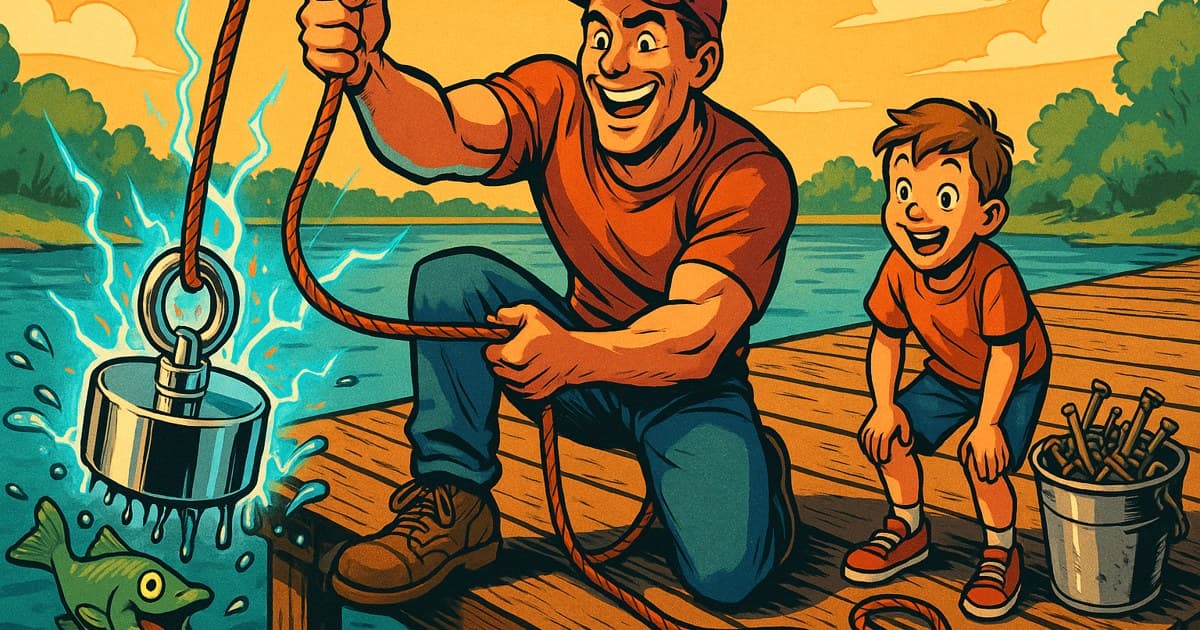
Summer magnet fishing is one of the better family activities out there, and not just because it's cheap and outdoors. There's genuine suspense in every throw, nobody knows what's coming up next, and that keeps kids engaged in a way that surprises most parents the first time they try it.
Pick spots that are easy to access and have a safe place to stand. A calm lake with a gradual bank or a low dock is ideal for younger kids. Avoid fast-moving rivers or spots with steep drop-offs when little ones are involved. Assign everyone a job: one person throws, one person manages the rope, one person inspects and cleans finds. It keeps the whole group involved and turns the outing into a team effort.
Set expectations before you go. Most pulls will be bolts, fishing weights, and scrap metal, and that's still exciting when you're eight years old. Frame it as a treasure hunt where even the small stuff counts. If a big find does come up, the reaction is unforgettable. Our dedicated magnet fishing with kids guide has more tips for making the experience smooth and fun, and the Father's Day magnet fishing post is worth a read if you're planning a special outing.
One practical note for family trips: bring a bucket with a lid for finds, a trash bag for anything you're hauling out, and a jug of water specifically for rinsing hands and gear. Wet, rusty metal and snacks don't mix well. A little prep makes the whole day cleaner and more enjoyable for everyone.
Summer Finds to Expect
Summer spots produce a reliable mix of the mundane and the genuinely interesting. Knowing what to expect helps you stay motivated through the pile of fishing weights and bottle caps, and helps you recognize something worth a closer look when it comes up.
The most common summer finds are fishing-related: hooks, lures, lead weights, and the occasional tackle box that went overboard. Near boat ramps and marinas, you'll pull up anchor hardware, shackles, and stainless steel fittings. Swimming areas tend to yield coins, keys, sunglasses frames, and the odd piece of jewelry, none of which sticks to a magnet, but the metal surrounding them often does, and it's worth scanning carefully.
Old bridges and historic waterways are where things get interesting. Horseshoes, old tools, military buttons, and antique hardware all show up in the right spots. Urban waterways can produce surprising historical pieces, this post on urban magnet fishing explains why city canals and rivers are so productive. For a broader sense of what metals you might encounter and what won't stick to your magnet, this metals guide is genuinely useful reading.
Occasionally you'll pull up something that requires a different kind of response. If you find a firearm, don't handle it further, this guide on finding a gun while magnet fishing walks you through exactly what to do. For everything else, proper disposal of your finds keeps you on the right side of both the law and your local environment. Speaking of which, the environmental impact of magnet fishing is a good reminder of why hauling out scrap is genuinely worthwhile.
A Few Summer-Specific Tips Before You Go
Early mornings are the move in peak summer. You beat the heat, you beat the crowds, and the water is often calmer and clearer before the day's activity kicks up. An hour at 7 a.m. is worth two hours at noon in terms of both comfort and visibility.
Check local rules before you head out. Magnet fishing is legal in most places, but some parks, nature reserves, and waterways have specific restrictions. Laws also vary by state and country, so it's worth a quick check. The state-by-state laws guide and the international laws overview are the best places to start.
Keep your gear in good shape through the season. Summer means more sessions, which means more wear on your rope, more rust on your magnet, and more grime on everything. A quick rinse and dry after each outing goes a long way. The gear cleaning and maintenance guide covers the full routine. And if you're ready to upgrade your setup, the magnet fishing gear page and the top brands guide are worth browsing before your next outing.
Frequently asked
What is the best magnet for summer magnet fishing?+
A double-sided neodymium magnet in the 500 to 1,000 pound pull-force range is a solid choice for summer, since you'll often be dragging across shallow, sandy bottoms where both sides can make contact. Check out our comprehensive magnet guide for a full breakdown of what to look for.
Is summer magnet fishing safe for kids?+
Yes, with the right spot and some basic precautions it's a great activity for children. Choose calm, accessible water with a safe place to stand, keep kids away from sharp finds, and make sure everyone wears gloves. Our magnet fishing with kids guide has everything you need to plan a safe and fun family outing.
Do I need a permit to go magnet fishing in summer?+
Permit requirements depend entirely on where you are, some locations require permission from landowners or local authorities, while others are completely open to the public. Laws vary by state and country, so always check local rules before you go. The state-by-state magnet fishing laws guide is a good starting point.