Why Is Magnet Fishing Illegal in Some Places? (2026)
Is Magnet Fishing Actually Illegal?
You've ordered the magnet, watched a dozen YouTube pulls, and then someone in a forum says, 'Wait, check if it's legal where you live first.' Suddenly you're down a rabbit hole of contradictory advice and you're not sure whether you're about to start a fun hobby or accidentally break a law. Deep breath. The situation is far less scary than it sounds.
Magnet fishing is legal in the vast majority of places. There is no federal ban in the United States, and most countries around the world have no specific law against it. What does exist is a patchwork of state regulations, local bylaws, waterway rules, and heritage laws that can restrict or outright ban it in specific locations. The hobby isn't uniquely singled out; it just happens to overlap with a few areas of existing law that were written long before anyone thought to throw a neodymium magnet into a river.
Understanding why those restrictions exist makes it much easier to know where you stand and how to stay on the right side of the rules. There are really three core reasons behind any ban: dangerous finds, protected history, and property rights. We'll walk through each one plainly, then look at where restrictions are most common and how to fish legally wherever you are.
Reason 1: Dangerous Finds and Unexploded Ordnance
This is the reason that genuinely justifies the most caution, and it's the one regulators take most seriously. Rivers, canals, and harbors in parts of Europe, the UK, and even some areas of the US have been used to dump weapons, ammunition, and military equipment for over a century. Pulling a corroded grenade or artillery shell out of the water is not a hypothetical; it happens, and it can be extremely dangerous if handled incorrectly.
The concern isn't that magnet fishing causes ordnance to become dangerous. Unexploded ordnance (UXO) is already dangerous sitting on the riverbed. The worry is that an inexperienced hobbyist might pull something up, not recognize it, and handle or move it in a way that creates a real risk. Some countries, particularly Germany, Belgium, and the Netherlands, have waterways with significant amounts of World War I and II era ordnance on the bottom, and authorities there have been especially cautious about any activity that disturbs the riverbed.
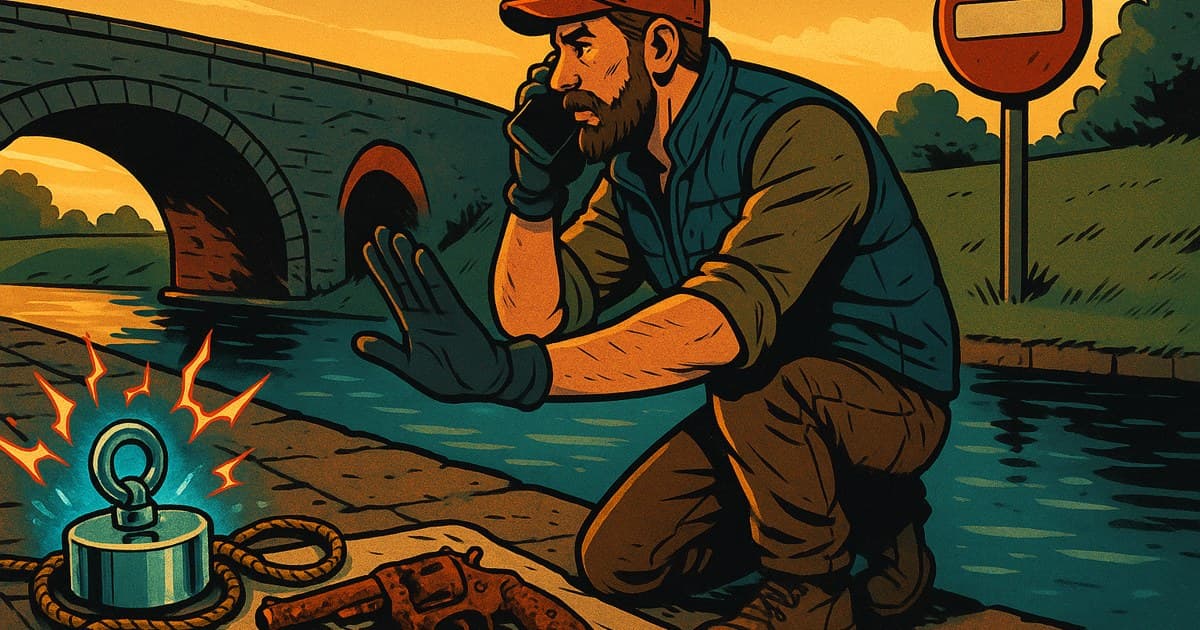
If you ever pull up something that looks like it could be a weapon, a shell casing, or any kind of military device, the rule is simple: do not move it, do not touch it further, back away, and call the police or emergency services. We have a full guide on what to do if you find a gun while magnet fishing that covers the right steps in detail. Handling dangerous finds responsibly is the single biggest thing the magnet fishing community can do to protect the hobby's reputation.
Reason 2: Historic Artifact and Heritage Laws
The second major reason for restrictions is cultural heritage protection. Many countries have laws that make it illegal to disturb, remove, or keep artifacts that are considered part of the national or regional historical record. These laws were mostly written with metal detecting and archaeological digs in mind, but magnet fishing falls squarely within their scope.
In England and Wales, for example, the Treasure Act 1996 requires you to report certain finds, including items over 300 years old made of precious metals, to the local coroner. Failure to do so is a criminal offense. Scotland has its own rules under the Civic Government (Scotland) Act. In the US, the Archaeological Resources Protection Act (ARPA) makes it illegal to excavate or remove archaeological resources from federal or tribal lands without a permit, and that includes waterways on those lands.
The practical effect for magnet fishers is that pulling an old coin, a medieval buckle, or a Civil War-era artifact out of a protected waterway and keeping it could land you in serious legal trouble, even if you had no idea the law applied. This is one of the strongest arguments for always researching the specific body of water you plan to fish. Our international magnet fishing laws overview goes deeper on how heritage rules vary by country.
It's worth saying clearly: most of what you'll pull up is scrap metal, bike frames, and old tools. But the laws don't care what you expected to find; they care what you did find and what you did with it. When in doubt, report it.
Reason 3: Property, Waterway, and Trespass Rules
The third category is the most common reason everyday magnet fishers run into trouble, and it has nothing to do with bombs or history. It's simply about who owns the water, the riverbed, and the land you're standing on.
In the US, most navigable waterways are managed by state or federal agencies, and you often need permission to fish them in any way, including with a magnet. Some states require a fishing license for magnet fishing because they classify it as a form of fishing. Others have specific permits for activities that disturb the riverbed. Privately owned ponds, lakes, and canals require the landowner's permission, full stop. Standing on a bridge or bank that's private property without permission is trespass, regardless of what you're doing with a rope and magnet.
Canal systems are a particularly common sticking point. In the UK, the Canal and River Trust manages most of the canal network and has historically discouraged magnet fishing on its waterways, though the rules have evolved. Always check with the managing authority before you fish a canal. The same applies to reservoirs, which are often off-limits entirely because they supply drinking water.
The good news is that public parks, public bridges over public waterways, and many public boat ramps are genuinely accessible. You just need to confirm that the specific spot you've chosen is actually public and that no local bylaw restricts the activity. Our guide on how to find magnet fishing spots near you walks through exactly how to do that research.
Where Is Magnet Fishing Restricted or Banned?
No single global list covers every restriction, because the rules exist at the state, county, and municipal level as often as at the national level. That said, here's a plain-English overview of the places where you're most likely to encounter legal friction.
In the United States, South Carolina is the most notable example of a state with a specific ban on magnet fishing in state waters without a permit. Several other states have rules that effectively restrict it through fishing license requirements or waterway regulations. The rules genuinely vary state by state, so checking before you go is not optional. Our state-by-state magnet fishing laws guide is the best place to start.
In Europe, Germany, Belgium, and the Netherlands have some of the strictest restrictions, primarily driven by UXO concerns. France has strong heritage protection laws that affect what you can do with finds. The UK has no national ban but has a layered system of waterway permissions and the Treasure Act reporting requirements mentioned above. If you're planning to fish internationally, read the international laws overview carefully.
Common restricted locations regardless of country include:
National parks and protected nature reserves, historic harbors and designated archaeological sites, reservoirs and drinking-water supply waterways, privately owned canals and lakes, and military or government property near water.
- National parks and protected nature reserves
- Historic harbors and designated archaeological sites
- Reservoirs and drinking-water supply waterways
- Privately owned canals and lakes
- Military or government-adjacent waterways
How to Stay Legal Wherever You Fish
Staying legal is mostly a matter of doing a little homework before you head out. It's not complicated, and it's genuinely worth the 20 minutes it takes. Here's the practical approach.
Start by identifying who manages the body of water you want to fish. For rivers and lakes in the US, that's usually a state fish and wildlife agency or the Army Corps of Engineers. For canals, it's the managing trust or authority. A quick call or email asking whether magnet fishing is permitted will usually get you a clear answer, and it also puts you on record as someone who asked in good faith.
Check whether your state requires a fishing license for magnet fishing. Some do, some don't, and the answer isn't always obvious from the license itself. Our state-by-state guide covers this for every US state. If you're new to the hobby and want a broader grounding in what to expect, 10 things I wish I knew when I started magnet fishing is a great companion read.
When you're out on the water, follow these habits to keep things clean and legal:
Always carry out everything you pull up. Leaving scrap on the bank is littering and reflects badly on the whole community. If you find something that looks like a weapon or ordnance, back away and call the authorities; don't handle it. Respect private property boundaries, even if the water itself is public. And if a ranger or landowner asks you to stop, stop politely and have the conversation calmly.
For guidance on what to do with the scrap you do pull up, check out our post on how to dispose of magnet fishing finds. Responsible disposal is part of being a good ambassador for the hobby, and it matters more than most beginners realize.
Frequently asked
Do I need a fishing license to go magnet fishing?+
It depends on your state or country. Some US states classify magnet fishing as a form of fishing and require a standard fishing license, while others have no such requirement. Check your state's fish and wildlife agency website or our state-by-state laws guide before you head out.
What should I do if I pull up something that looks like a bomb or old military weapon?+
Stop, put it down carefully if you've already lifted it, back away from the area, and call the police or emergency services immediately. Do not try to move it, clean it, or identify it yourself, as old ordnance can still be dangerous even after decades underwater.
Is magnet fishing legal in public parks?+
Often yes, but not always. Many public parks allow it on public waterways, but some have local bylaws that restrict it, and national parks in the US generally prohibit any activity that disturbs the riverbed or removes objects. Always check with the park authority before you go.